
Young people are in the audience, but not at the table
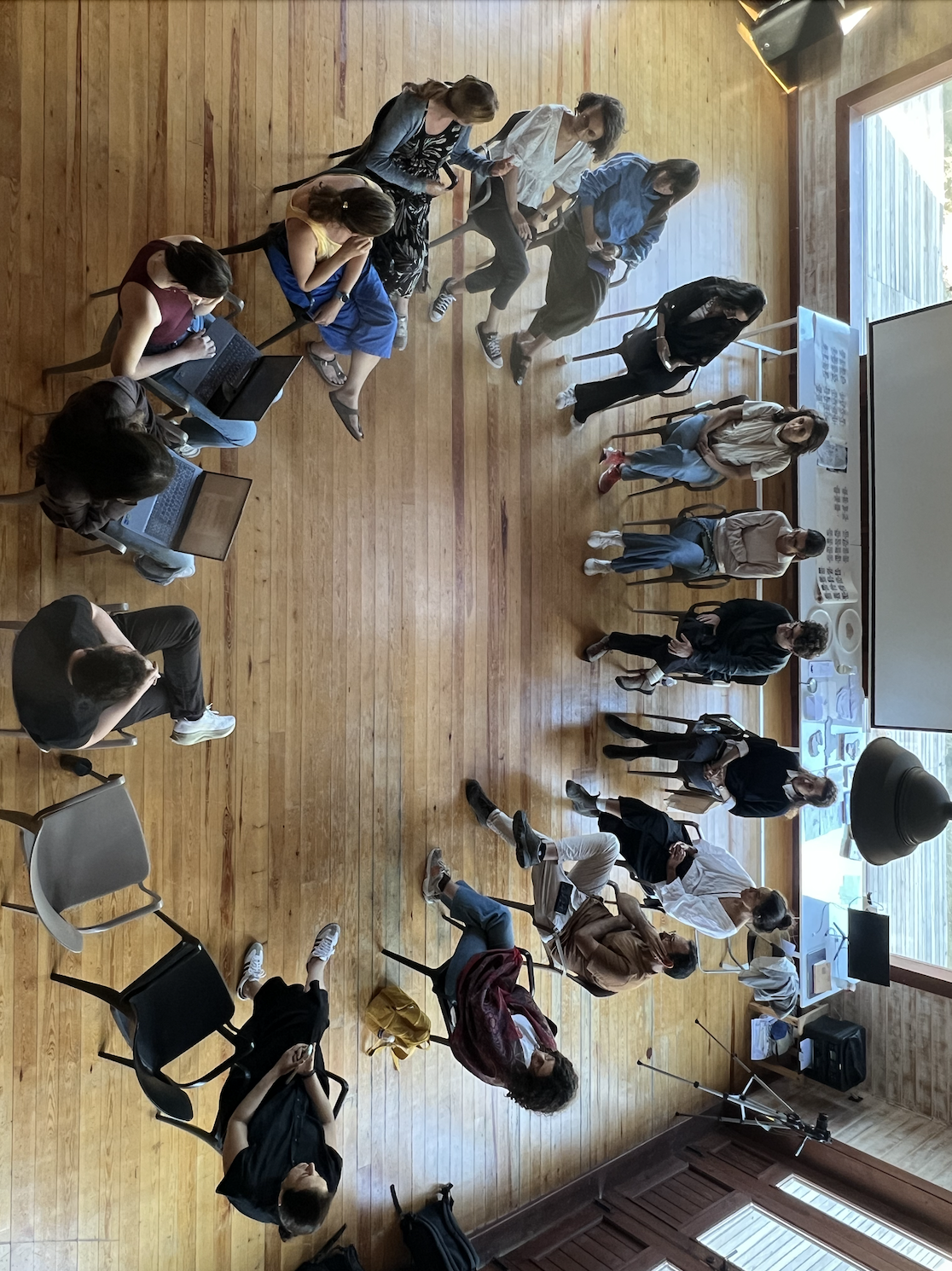
In İzmir this September, Şebnem Yurdakul (Kentimiz İzmir Derneği) and Pierre-Loup Lenoir (Fondazione Santagata, which leads the project’s youth research) brought grassroots cultural organisations from Türkiye and across Europe together. They asked how culture can help build more participatory and sustainable societies, with young people helping to shape them.

Young people are in the audience, but not at the table
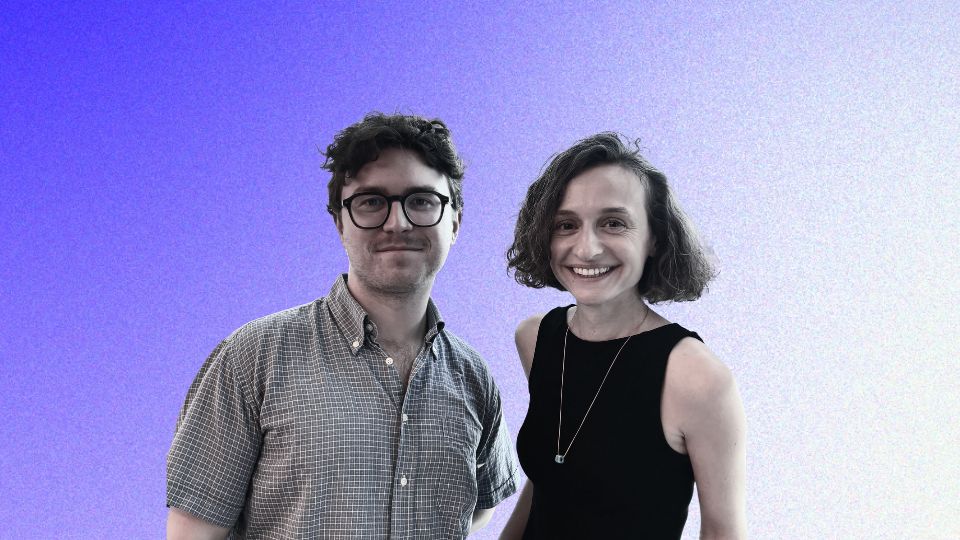
In İzmir this September, Şebnem Yurdakul (Kentimiz İzmir Derneği) and Pierre-Loup Lenoir (Fondazione Santagata, which leads the project’s youth research) brought grassroots cultural organisations from Türkiye and across Europe together. They asked how culture can help build more participatory and sustainable societies, with young people helping to shape them.

Young people care about climate change and show up to cultural activities. So why do so few of them end up helping to run the organisations that host them? In İzmir this September, cultural heritage expert Şebnem Yurdakul and researcher Pierre-Loup Lenoir brought grassroots cultural organisations from Türkiye and across Europe together to look for answers during workshops, in old historic neighbourhoods and at local collectives. All built around one question: how can culture help build more participatory and sustainable societies, with young people involved in shaping them?

You both work with cultural heritage, but from different angles. Where does each of you start?
Sebnem: Cultural heritage is at the centre of our work at Kentimiz İzmir Derneği. We work on conservation, documentation, strategic planning and training, with a strong focus on community engagement. That includes tangible and living heritage: historic sites, but also collective memory, traditions, local knowledge and the connections between communities and their environment. We try to make heritage accessible and meaningful to different communities, particularly children and young people.
Pierre-Loup: My background is in political science and in heritage and memory studies. I work at Fondazione Santagata in Turin, a research institute for the economics of culture. We look at new ways of managing heritage so that it creates social and economic opportunities for the people around it, through research, training and advice for institutions. In Democracy in Action, we lead the research on youth. This is also what interests me most: youth mobilisation. I think it’s an undervalued part of what cultural heritage can do. It works in both directions: what young people can bring to the debate on heritage, and what heritage can give back to them.
Pierre-Loup, Türkiye is outside the EU. Why İzmir?
Pierre-Loup: To have meaningful discussions, we wanted to escape the prism of Western Europe. It’s easy to organise a workshop with neighbouring countries, but then the conclusions start to look alike and the points of view become homogeneous. We operate in Italy, so we asked ourselves where we could find interventions people aren’t exposed to every day.
Sebnem: İzmir has a complex history, shaped by different cultures, communities and periods of migration. That’s what makes it such a rich place for these conversations. Which brings us to a bigger question: who decides what counts as heritage in your city, and who is missing from that conversation?
Sebnem: Traditionally, those decisions have been shaped mainly by public institutions, experts and professionals. Their knowledge is essential, but the perspectives of local communities are not always sufficiently represented. We need more inclusive processes, especially involving young people and communities who are often excluded from decision-making. After all, deciding what we preserve also means deciding which stories and memories we pass on to future generations.
Pierre-Loup: That mirrors one of the clearest findings from our research. We surveyed 379 grassroots cultural organisations across Europe. Nearly all of them have young people in their audiences or activities. But fewer than a third have young people in their governance.
Why is that gap so wide?
Pierre-Loup: There are many reasons. Many of the organisations that responded have fewer than ten employees, sometimes fewer than five. Grassroots are faced with structural difficulties of time poverty and a constriction of funding channels, with youth involvement as a side effect. But I also think there’s a generational gap: a certain resistance to embracing young people’s point of view and capacities.
Sebnem: I recognise those constraints in Türkiye too. Cultural organisations often operate with limited financial and human resources. A large part of their time goes into keeping activities running, developing projects and securing funding, which makes long-term planning difficult.
Pierre-Loup: And the generational gap works both ways. Young people sometimes believe they won’t be heard, or that they no longer speak the same language as more experienced practitioners. They don’t always feel the doors are open to them.
Young people are often deeply worried about climate change. How can cultural organisations help turn that concern into action?
Sebnem: Cultural organisations can bring people together and create spaces for dialogue, creativity and collective action. Through art and culture, young people can explore climate change from different perspectives and connect it to their own lives and communities. But raising awareness is only the first step. Meaningful participation means young people get to develop their own ideas, take part in decisions and put their proposals into practice.
"If young people are not stakeholders in what you want to achieve, you won’t achieve anything."
Pierre-Loup: I agree, and that’s where it often breaks down. Young people are mostly engaged as participants or audiences, which means engagement is project-based and short. It lacks sustainability. Climate is an issue you need to engage with consistently, over years. One conclusion from this week is that young people will often come through the door on their own. Keeping them there is the hard part. At the very least they need co-creation responsibility. If they’re not stakeholders in what you want to achieve, you won’t achieve anything.
Sebnem: That’s why the space, resources and connections matter so much. Organisations have to give young people a genuine role in shaping both the process and its outcomes.
Heritage is often associated with the past. How do you make it relevant to the challenges people face now?
Sebnem: Heritage becomes meaningful when people can connect it to their own lives. Traditional knowledge, local production practices and historic buildings tell us a lot about how communities lived, used resources and responded to their environment. Take Kemeraltı, the historic city centre. It has a long tradition of craftsmanship, repair and reuse, which opens up conversations about consumption, waste and how we use resources.
Or look at traditional architecture. Historic buildings in the city centre and surrounding districts responded to the local climate through natural ventilation, shaded courtyards and local materials. That’s very relevant now, with rising temperatures and growing energy demand. The best way in is through direct experience: walking through historic neighbourhoods, meeting craftspeople, looking at how a building deals with heat.
Pierre-Loup, you visited several local organisations during the workshop. What stood out?
Pierre-Loup: We visited two very different places: Atölye Deneme, an urban space, and K2 Breathing Zone, which is more of a nature space. Both show what’s possible in İzmir, and in some ways they go against the grain. That isn’t easy with limited capacity and staff. Yet they’ve found sustainable models: they’re embedded in the local community and they champion diverse points of view, which is not always the case.
What’s their secret?
Pierre-Loup: Take Atölye Deneme: It has an open-door policy, a range of workshops and real outreach to the neighbourhood. It’s similar to what Sebnem’s team does with Kentimiz İzmir Derneği. The community feels part of the story, rather than something you engage with periodically through projects. That’s the key, I think: existing outside project timelines. Long-lasting relationships that projects can build on, rather than everything revolving around projects that last a few weeks, or sometimes a few days.
Sebnem: I’d add that this applies to climate action too. Rather than treating it as a separate project, we should ask how it can become part of our existing work. We can start by reviewing our daily practices, education programmes and conservation approaches from a sustainability perspective. Small changes can be meaningful, especially when they’re part of a longer-term strategy.
What have you taken from each other?
Sebnem: Seeing how different approaches complement each other. Combining local knowledge and practical experience with creative and participatory methods opens up interesting possibilities, especially with young people and local communities.
Pierre-Loup: And from Sebnem’s side, that deep local anchoring. Honestly, we’re guilty of the thing I was just critiquing: we’re here on a project for only a few days. So the question for us is how to keep the link going, and build a network we can take back to our own countries. We’ve worked together in İzmir before, and now on Democracy in Action. The point is that this shouldn’t be a one-off, extractive workshop, but a lasting collaboration.
"Honestly, we’re guilty of the thing I was just critiquing: we’re here on a project for only a few days. So the question for us is how to keep the link going"
Last question. If you could start one youth-led climate and heritage project in İzmir tomorrow, what would it be?
Sebnem: I’d focus on heritage, climate change and everyday life in İzmir’s neighbourhoods. Young people would explore local knowledge, identify the changes and challenges affecting their neighbourhood, and work with residents on practical ideas for more sustainable living. Crucially, it would be linked to local decision-making, so young people have a real chance to influence what happens in the places they live.
Pierre-Loup: And it would have to last longer than a project cycle. That’s what keeps young people in the room once they’ve come through the door. And hopefully, no longer just an audience member, but a deciding party.