.webp)
Co-Created Cultural Spaces: The Role of Feminist Artivism in Democracy
Co-Created Cultural Spaces: The Role of Feminist Artivism in Democracy examines how women’s artistic and activist initiatives use physical, digital and symbolic spaces to challenge exclusion, amplify marginalised voices and create new forms of participation.
Read the report here
Developed by researchers at Jagiellonian University as part of Democracy in Action, the report draws on a mapping of 123 organisations, informal collectives and project-based initiatives, alongside a literature review and analysis of artivist practices. It identifies five key strategies through which feminist artivism transforms space: reclaiming, repurposing, reframing, co-production and re-scaling.
The findings show that feminist artivism often operates across formal and informal structures, combining temporary actions, cultural practices and digital engagement. Rather than viewing these flexible forms as a weakness, the report highlights their potential to build solidarity, strengthen community and respond to social and political change.
The report also offers recommendations for public institutions, cultural organisations and NGOs, calling for more inclusive spaces, flexible funding, protection for artistic freedom and support that respects the autonomy of grassroots initiatives.
.png)
Co-Created Cultural Spaces: The Role of Feminist Artivism in Democracy
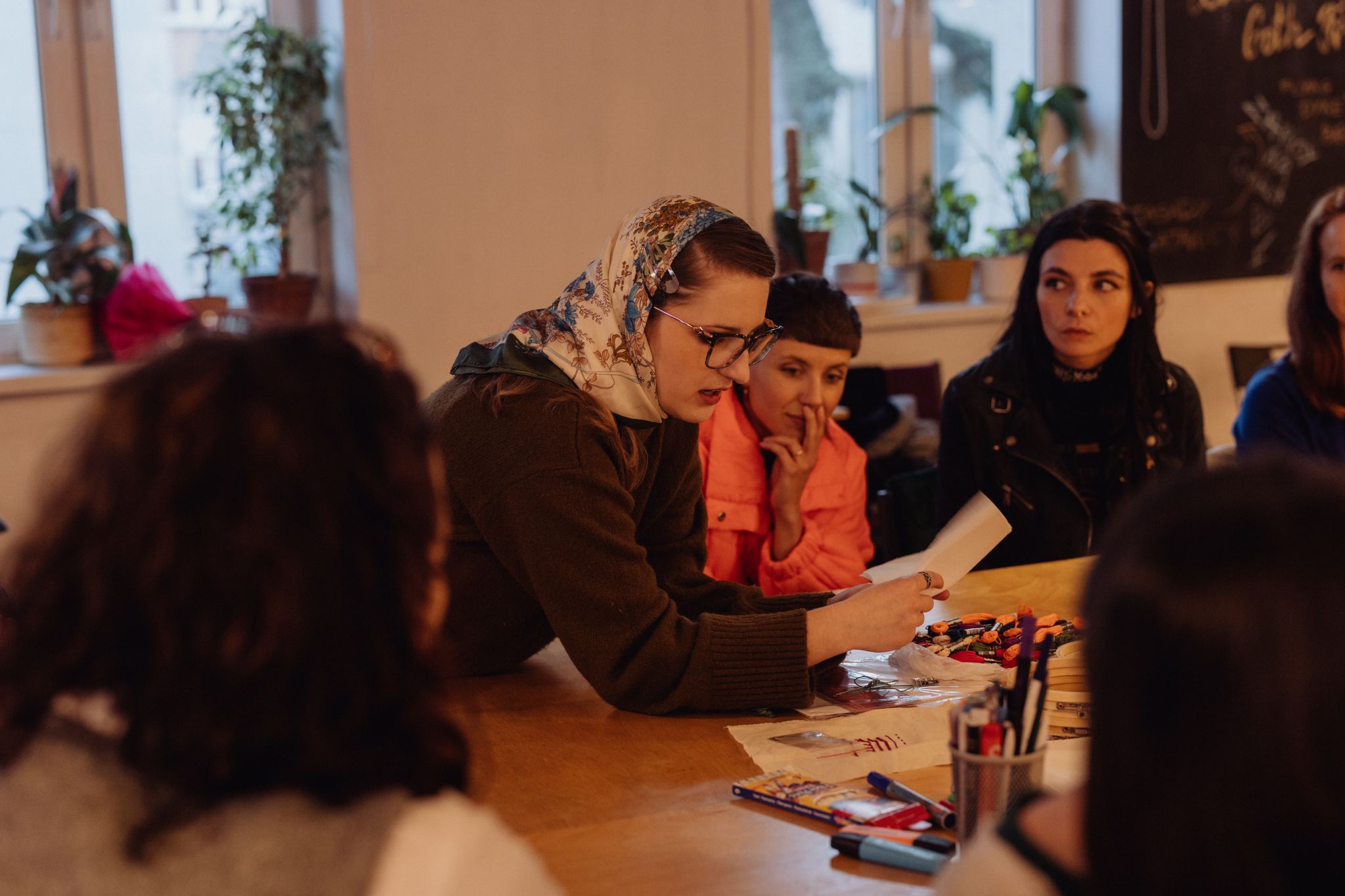
Co-Created Cultural Spaces: The Role of Feminist Artivism in Democracy examines how women’s artistic and activist initiatives use physical, digital and symbolic spaces to challenge exclusion, amplify marginalised voices and create new forms of participation.
Read the report here
Developed by researchers at Jagiellonian University as part of Democracy in Action, the report draws on a mapping of 123 organisations, informal collectives and project-based initiatives, alongside a literature review and analysis of artivist practices. It identifies five key strategies through which feminist artivism transforms space: reclaiming, repurposing, reframing, co-production and re-scaling.
The findings show that feminist artivism often operates across formal and informal structures, combining temporary actions, cultural practices and digital engagement. Rather than viewing these flexible forms as a weakness, the report highlights their potential to build solidarity, strengthen community and respond to social and political change.
The report also offers recommendations for public institutions, cultural organisations and NGOs, calling for more inclusive spaces, flexible funding, protection for artistic freedom and support that respects the autonomy of grassroots initiatives.


.png)